
BRICS Technology Cooperation: Innovation, Digital Sovereignty, and the Race for Strategic Autonomy
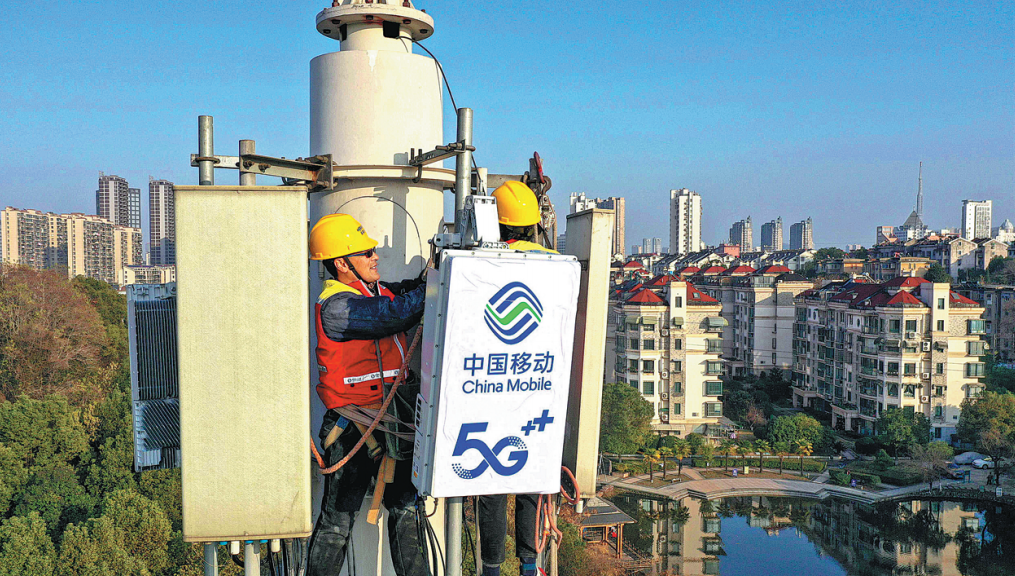
Technology has become the defining arena of 21st-century power. Control over semiconductors, artificial intelligence, quantum computing, and digital infrastructure now shapes geopolitical influence as decisively as aircraft carriers once did.
For the expanded BRICS bloc — Brazil, Russia, India, China, South Africa, and new members including Iran, Egypt, Ethiopia, and the UAE — technology cooperation is no longer secondary to economics. It is central to strategic autonomy.
While BRICS is not a unified technology alliance, its members increasingly share a common objective: reduce dependence on Western-controlled systems and build resilient, sovereign innovation ecosystems.
The emerging question is whether BRICS technology cooperation can move from parallel ambition to meaningful integration.
China: The Technological Anchor
China is the technological heavyweight within BRICS. It leads in:
- 5G infrastructure
- Advanced manufacturing
- Renewable energy technologies
- Artificial intelligence research output
- Quantum communications
Chinese firms like Huawei and SMIC are central to Beijing’s effort to create a vertically integrated technology ecosystem, particularly amid escalating U.S. export controls on advanced chips.
China’s “dual circulation” strategy — emphasizing domestic innovation while maintaining global trade — aligns with broader BRICS narratives around digital sovereignty.
However, China’s dominance also creates asymmetry. Smaller BRICS economies must balance the benefits of Chinese infrastructure investment with concerns about overreliance.

India: Digital Scale and Software Strength
India brings a different technological profile to BRICS — one defined less by hardware manufacturing and more by software, digital services, and scale.
India’s digital public infrastructure, including Aadhaar and the Unified Payments Interface (UPI), has been widely cited as a model for scalable, low-cost financial inclusion. Its IT services giants — such as Infosys and Tata Consultancy Services — power global corporate backbones.
At the same time, New Delhi is investing heavily in semiconductor fabrication, offering billions in incentives to attract chip manufacturers. India’s strategy is pragmatic: diversify supply chains while preserving strategic autonomy.
As India’s IT Minister Ashwini Vaishnaw stated in 2023, “Technology must serve as a tool of empowerment, not dependence.”
India’s positioning within BRICS reflects that philosophy — open to cooperation, cautious about alignment.
Russia: Sanctions-Driven Innovation
Russia approaches technology through the lens of necessity. Western sanctions following the Ukraine conflict severely restricted access to advanced semiconductors, software, and industrial components.
In response, Moscow accelerated import substitution programs and deepened technology ties with China and other non-Western partners. Russia maintains strengths in:
- Cybersecurity
- Military-adjacent technologies
- Nuclear energy innovation
- Space engineering
The challenge remains scaling civilian high-tech sectors without Western supply chains. Cooperation within BRICS — particularly in payments systems and digital infrastructure — offers Moscow an alternative economic corridor.
Brazil and South Africa: Regional Tech Hubs
Brazil has a growing fintech ecosystem and a robust agricultural technology sector, integrating AI and satellite monitoring into agribusiness. São Paulo remains Latin America’s startup capital.
South Africa plays a critical role in African digital infrastructure and fintech expansion. Cape Town’s tech cluster is among the continent’s most dynamic.
Both countries are positioning themselves as regional bridges — linking BRICS innovation ecosystems to Latin American and African markets.
Digital Sovereignty and the Push for Alternatives
A core theme uniting BRICS technology policy is digital sovereignty — the idea that nations should control their own data, infrastructure, and standards.
This includes:
- Alternative payment systems to SWIFT
- Local cloud storage requirements
- Domestic semiconductor production
- National cybersecurity frameworks
China’s BeiDou navigation system, for instance, provides an alternative to GPS — with potential adoption across BRICS states.
Meanwhile, discussions around a BRICS digital currency, while still exploratory, reflect broader ambitions to reshape the technological-financial nexus.
Semiconductors: The Strategic Bottleneck
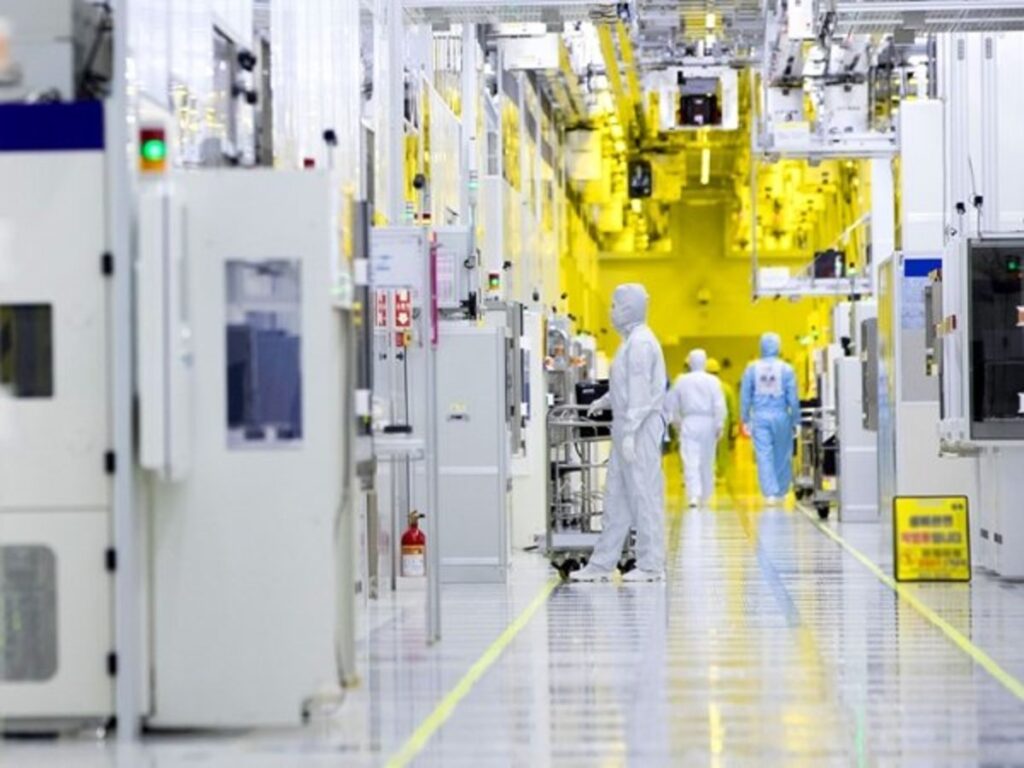
If there is one sector defining the limits of BRICS technology cooperation, it is semiconductors.
China is racing to close the gap with leading-edge chipmakers. India seeks to build fabrication capacity from scratch. Russia struggles with advanced node access. Brazil and South Africa lack large-scale chip industries.
The technological chokepoint remains extreme ultraviolet (EUV) lithography, dominated by Western firms. Without access to cutting-edge manufacturing tools, BRICS members must either collaborate on alternative pathways or accept a multi-tiered technology ecosystem.
Some analysts suggest a division of labor model:
- China: advanced manufacturing
- India: chip design and software
- Russia: materials science
- Brazil and South Africa: downstream applications
Whether political trust can sustain such coordination remains uncertain.
Emerging Members and Infrastructure Diplomacy
New BRICS entrants such as Iran, Egypt, and the UAE add strategic digital corridors.
Iran has invested heavily in domestic platforms amid sanctions. Egypt controls critical data routes via the Suez Canal’s fiber-optic cables. The UAE positions itself as a global AI and semiconductor investment hub.
Together, they expand BRICS’ technological geography — linking Asia, Africa, and the Middle East.
Internal Competition vs. Collective Strategy
Despite shared rhetoric, BRICS technology cooperation faces structural challenges:
- Divergent regulatory models
- Data governance differences
- Competition for foreign direct investment
- National security sensitivities
India, for example, has restricted certain Chinese apps and investments on security grounds, illustrating the tension between cooperation and competition.
BRICS technology integration is therefore incremental rather than institutionalized. Unlike the European Union, there is no supranational regulatory authority harmonizing standards.
Yet that flexibility may be intentional. For many members, sovereignty outweighs efficiency.
Conclusion: A Parallel Tech Ecosystem in the Making?
BRICS is unlikely to replace Western-dominated technology ecosystems in the near term. However, it does not need to.
Its technological trajectory suggests the gradual construction of a parallel network — one rooted in:
- Local currency trade
- Independent digital infrastructure
- Regional supply chain integration
- Strategic hedging
In a world increasingly defined by techno-nationalism, BRICS countries are betting that resilience matters more than uniformity.
For decision makers and industry leaders across the bloc, the imperative is clear: cooperation must move beyond summit declarations into practical, cross-border innovation frameworks.
The multipolar world will not only be decided by military power or political alignment — but by who writes the code, builds the chips, and controls the networks.
Leave a comment