
BRICS Space Cooperation: Satellites, Sovereignty, and the New Orbital Order
Space as Strategic Infrastructure
Space is no longer the exclusive domain of Cold War superpowers. It is a proving ground for technological sophistication, military deterrence, climate monitoring, telecommunications, and national prestige. For the BRICS bloc — Brazil, Russia, India, China, South Africa and its newer members — space cooperation represents both opportunity and quiet competition.
Though BRICS has yet to establish a unified space agency or joint launch command, the combined capabilities of its members are formidable. Together, they represent multiple independent launch systems, global navigation networks, lunar exploration programs, and rapidly expanding satellite constellations.
The significance is clear: in a multipolar world, sovereignty increasingly extends beyond Earth’s atmosphere.
China: Scale and Long-Term Ambition
At the center of BRICS space capability sits China. Over the past two decades, Beijing has built one of the world’s most comprehensive space programs. The China National Space Administration operates the Tiangong space station, has completed a series of successful lunar sample-return missions, and landed a rover on Mars.
China’s BeiDou navigation system now rivals GPS in global coverage, offering participating countries an alternative positioning system independent of U.S. control. For many BRICS members, access to BeiDou services strengthens digital sovereignty and military redundancy.
China’s long-term roadmap includes a planned joint lunar research station with Russia and expanded deep-space exploration in the 2030s. Its space program is tightly integrated with industrial policy, telecommunications expansion, and defense modernization.
Russia: Legacy, Experience, and Strategic Depth
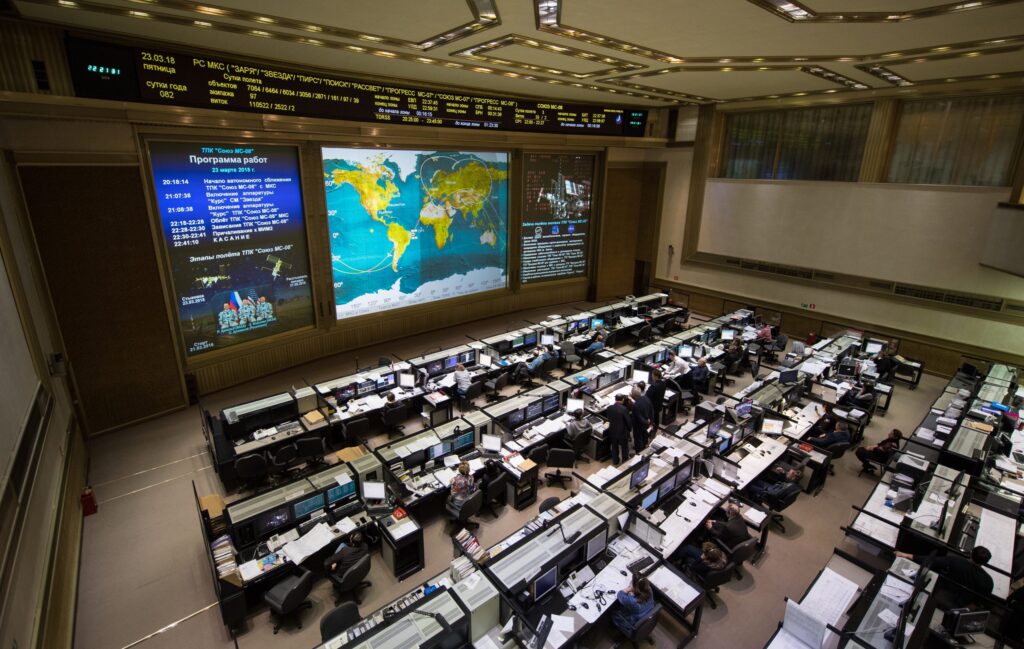
If China represents scale, Russia represents legacy. Through Roscosmos, Moscow maintains decades of expertise in launch systems, propulsion, and human spaceflight.
Despite sanctions and budgetary constraints, Russia remains a major launch provider and continues to develop heavy-lift rockets and next-generation spacecraft. Its experience in orbital operations and missile technology ensures it remains strategically relevant within BRICS space discussions.
Western sanctions have complicated technology transfers and international partnerships. Increasing collaboration with China and potential BRICS-aligned states may provide alternative pathways for sustaining Russia’s space ambitions.
India: Cost-Effective Precision and Expanding Reach
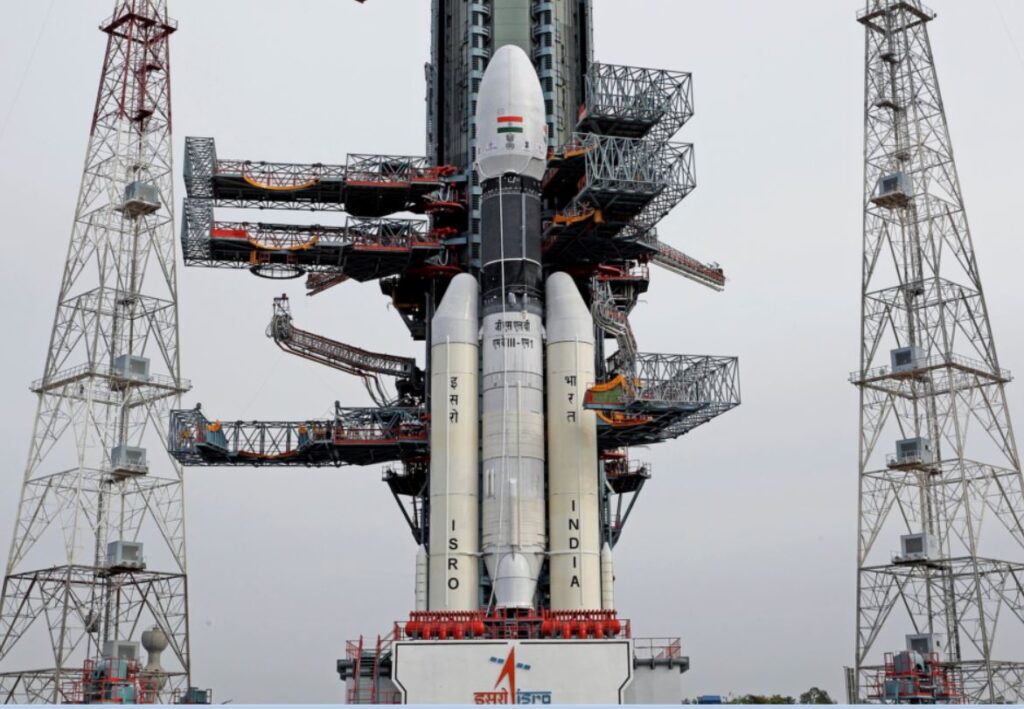
India has emerged as one of the most dynamic space actors within BRICS. The Indian Space Research Organisation (ISRO) has built a reputation for cost-effective missions and technical precision.
In 2023, India became the first nation to land near the Moon’s south pole — a milestone that underscored its growing capabilities in deep-space navigation and robotics. India also successfully launched its first solar observation mission and continues expanding its commercial launch services.
New Delhi’s approach to space mirrors its broader foreign policy: strategic autonomy with diversified partnerships. India collaborates with both Western and non-Western space agencies while building independent satellite navigation through the NavIC system.
Brazil and South Africa: Geographic and Infrastructure Advantages
Brazil and South Africa bring different but complementary assets. Brazil’s Alcântara Launch Center, located near the equator, offers geographic advantages for fuel-efficient launches. South Africa plays a critical role in space situational awareness and hosts key ground station infrastructure supporting deep-space tracking.
Together, they extend BRICS’ orbital footprint into the Southern Hemisphere — a strategic consideration as satellite traffic intensifies.
Emerging BRICS members add further layers. The United Arab Emirates has invested heavily in Mars exploration and satellite manufacturing. Iran has pursued domestic launch capabilities despite sanctions. Egypt’s growing satellite program strengthens regional telecommunications resilience.
While their capabilities vary, the symbolic expansion of BRICS into the Middle East and Africa widens the coalition’s space geography.
Space and Security: The Dual-Use Reality
Space is inseparable from military strategy. Satellites underpin communications, missile early-warning systems, intelligence gathering, and precision navigation. Hypersonic weapons, increasingly tested by both China and Russia, depend on advanced space-based tracking.
This dual-use nature makes space cooperation both promising and sensitive. While BRICS summits emphasize peaceful exploration and shared research, national defense priorities remain close to the surface.
One potential area of collaboration lies in Earth observation. Climate monitoring, disaster response, and agricultural planning are shared concerns across BRICS nations. Pooling satellite data could strengthen food security and environmental resilience — particularly for countries vulnerable to climate volatility.
Another avenue is joint satellite constellations for telecommunications and broadband expansion across underserved regions in Africa and Latin America. Such initiatives would reinforce economic integration while reducing reliance on Western commercial providers.
Structural Constraints and Strategic Opportunity
Unlike the European Space Agency, BRICS lacks a centralized funding mechanism or integrated command structure. Political differences — particularly between China and India — may limit deep institutional coordination.
Moreover, competition for prestige remains real. Lunar exploration, Mars missions, and astronaut programs are potent symbols of national achievement. Cooperation must coexist with rivalry.
Yet the aggregate trajectory is unmistakable. Collectively, BRICS nations now account for a significant share of global launches, satellite deployments, and space research output. Their investments reflect a shared recognition: space infrastructure is foundational to economic development, military security, and geopolitical influence.
Conclusion: Toward a Multipolar Orbital Order
The broader implication is the gradual emergence of a multipolar orbital order. For decades, space governance was dominated by the United States and its allies. Today, alternative navigation systems, launch providers, and research partnerships are diversifying that landscape.
For policymakers and industry leaders across BRICS countries, the next phase will require moving from symbolic cooperation to practical integration — shared standards, coordinated debris mitigation strategies, and cross-investment in commercial space ventures.
Space is no longer a distant frontier. It is an operational domain of daily life, from smartphone navigation to climate forecasting. As BRICS nations expand their presence beyond Earth, they are not merely chasing prestige. They are securing infrastructure that underpins sovereignty itself.
In the coming decade, the success of BRICS space cooperation will be measured not only in rocket launches, but in whether the bloc can translate orbital capability into sustainable, coordinated strategic influence.
Leave a comment