
Power, Policy, and Influence: How BRICS Is Reshaping Global Politics
From Economic Bloc to Political Platform
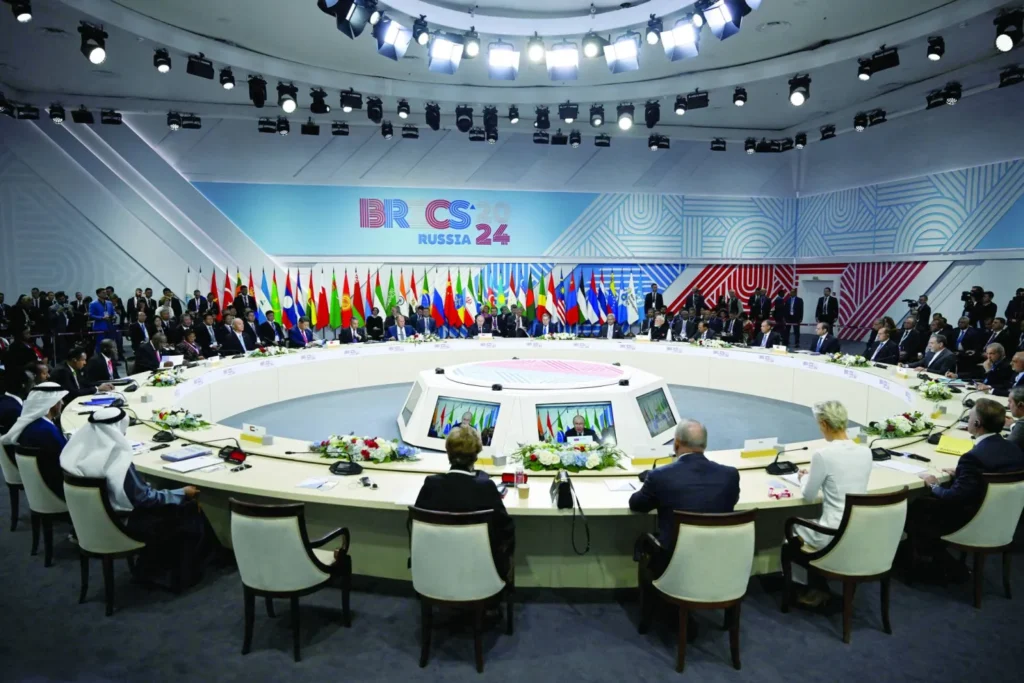
What began in 2009 as a loose coalition of emerging economies has evolved into a political platform with growing global weight. The BRICS grouping — Brazil, Russia, India, China, South Africa, and its expanded membership including Iran, Egypt, Ethiopia, and the United Arab Emirates — now represents a substantial share of the world’s population, energy production, and economic output.
But the bloc’s most significant evolution may not be economic. It is political.
Across trade policy, environmental negotiations, development finance, and institutional reform, BRICS increasingly positions itself as a counterbalance to Western-dominated governance structures. The bloc’s rhetoric emphasizes sovereignty, non-interference, and multipolarity — themes that resonate across much of the Global South.
Yet internal contradictions remain. The political future of BRICS will depend on whether shared grievances translate into shared strategy.
Trade: Rewriting the Rules of Exchange
Trade is the foundation of BRICS political influence. Collectively, its members are reshaping supply chains, commodity markets, and currency settlements.
China remains the largest trading nation in the world, serving as the primary commercial partner for many developing economies. India is rapidly expanding manufacturing capacity, while Brazil and Russia play critical roles in global food and energy exports.
One of the most politically significant trends has been the gradual move toward local currency trade settlements. Sanctions on Russia accelerated bilateral agreements denominated in yuan, rupees, and other currencies. Though the U.S. dollar remains dominant, the symbolic impact of these shifts is substantial.
The creation of the New Development Bank (NDB) further signals intent. Headquartered in Shanghai, the NDB was designed to finance infrastructure and sustainable development projects without the political conditionality often associated with Western lenders.
Trade, in this sense, becomes political leverage.
Environmental Policy: Development vs. Climate Pressure
Environmental politics is another arena where BRICS exerts influence. The bloc’s members share a common stance in climate negotiations: historical emissions responsibility lies primarily with developed nations.
At global forums such as COP summits, BRICS countries frequently advocate for:
- Climate finance commitments from industrialized states
- Technology transfer mechanisms
- Gradual rather than abrupt energy transitions
- Recognition of development needs
South Africa and India emphasize energy access for growing populations. China balances renewable expansion with coal reliance. Brazil’s environmental policy shifts often reflect domestic political cycles and global pressure regarding the Amazon rainforest.
The political tension lies in reconciling economic growth with climate commitments. BRICS countries argue that sustainability must not impede poverty reduction.
As global climate policy tightens, BRICS’ collective negotiating position will likely grow more coordinated — particularly in resisting trade-linked carbon tariffs.
Cultural Influence and Soft Power
Political influence is not limited to trade and climate. Cultural impact matters.
China’s Confucius Institutes, India’s diaspora networks, Brazil’s cultural exports, and Russia’s media platforms all contribute to shaping global narratives. Within the Global South, BRICS countries often frame themselves as champions of alternative development paths.
Film, education exchanges, digital platforms, and media outreach reinforce political ties that transcend formal diplomacy.
The growing expansion of BRICS membership reflects this soft power appeal. Countries seeking diversification from Western alignment view the bloc as a platform for strategic balancing.
Crime, Sanctions, and Governance Challenges
Political power also carries governance challenges.
Sanctions on Russia and Iran have forced alternative financial systems to develop rapidly, sometimes increasing opacity in trade flows. Cross-border enforcement mechanisms remain uneven among BRICS members, raising concerns about illicit finance or sanctions evasion networks.
Meanwhile, cybercrime and digital fraud have become pressing issues as digital infrastructure expands. AI-driven misinformation campaigns and online influence operations complicate the political environment.
Internal political systems vary widely across BRICS — from electoral democracies to centralized governance models. These differences complicate the articulation of unified political norms.
Yet BRICS generally avoids ideological alignment, instead emphasizing sovereignty and non-interference as common ground.

Institutional Reform: The Multipolar Agenda
A central political ambition of BRICS is reform of global institutions.
Members have consistently called for:
- Greater representation in the International Monetary Fund
- Reform of United Nations Security Council structures
- Fairer voting rights in multilateral development banks
- Reduced reliance on Western financial clearing systems
India and Brazil have both long sought permanent seats on the UN Security Council. China and Russia, already permanent members, have expressed conditional support for broader reform discussions.
The push for institutional restructuring reflects demographic and economic shifts. BRICS countries argue that governance frameworks designed in the mid-20th century no longer reflect 21st-century realities.
Whether reform occurs through negotiation or gradual parallel institution-building remains an open question.
Expansion and Internal Complexity
The expansion of BRICS to include Middle Eastern and African economies adds diplomatic weight — but also complexity.
Energy exporters like the UAE and Iran introduce new geopolitical dimensions. African entrants amplify representation of the Global South. However, divergent regional rivalries and policy priorities could complicate consensus-building.
Unlike NATO or the European Union, BRICS has no binding treaty framework. Its political strength lies in flexibility — but flexibility can limit cohesion.
Conclusion: Platform or Power Center?
The political evolution of BRICS reflects a broader transformation in global governance. Trade flows are diversifying. Environmental negotiations are shifting. Institutional reform debates are intensifying.
BRICS does not operate as a unified ideological bloc. Instead, it functions as a coordination platform for countries seeking greater strategic autonomy within a changing order.
Its success will depend on three factors:
- Whether economic cooperation translates into institutional durability
- Whether internal rivalries remain manageable
- Whether the bloc can articulate a coherent vision beyond opposition to Western dominance
In a world defined increasingly by fragmentation and realignment, BRICS offers an alternative center of gravity — not yet a fully consolidated power center, but no longer merely a symbolic coalition.
The coming decade will determine whether BRICS becomes a permanent pillar of global politics or remains a flexible forum shaped by circumstance.
What is clear is that its political influence is expanding — and global governance will have to adjust accordingly.
Leave a comment